
What We Do
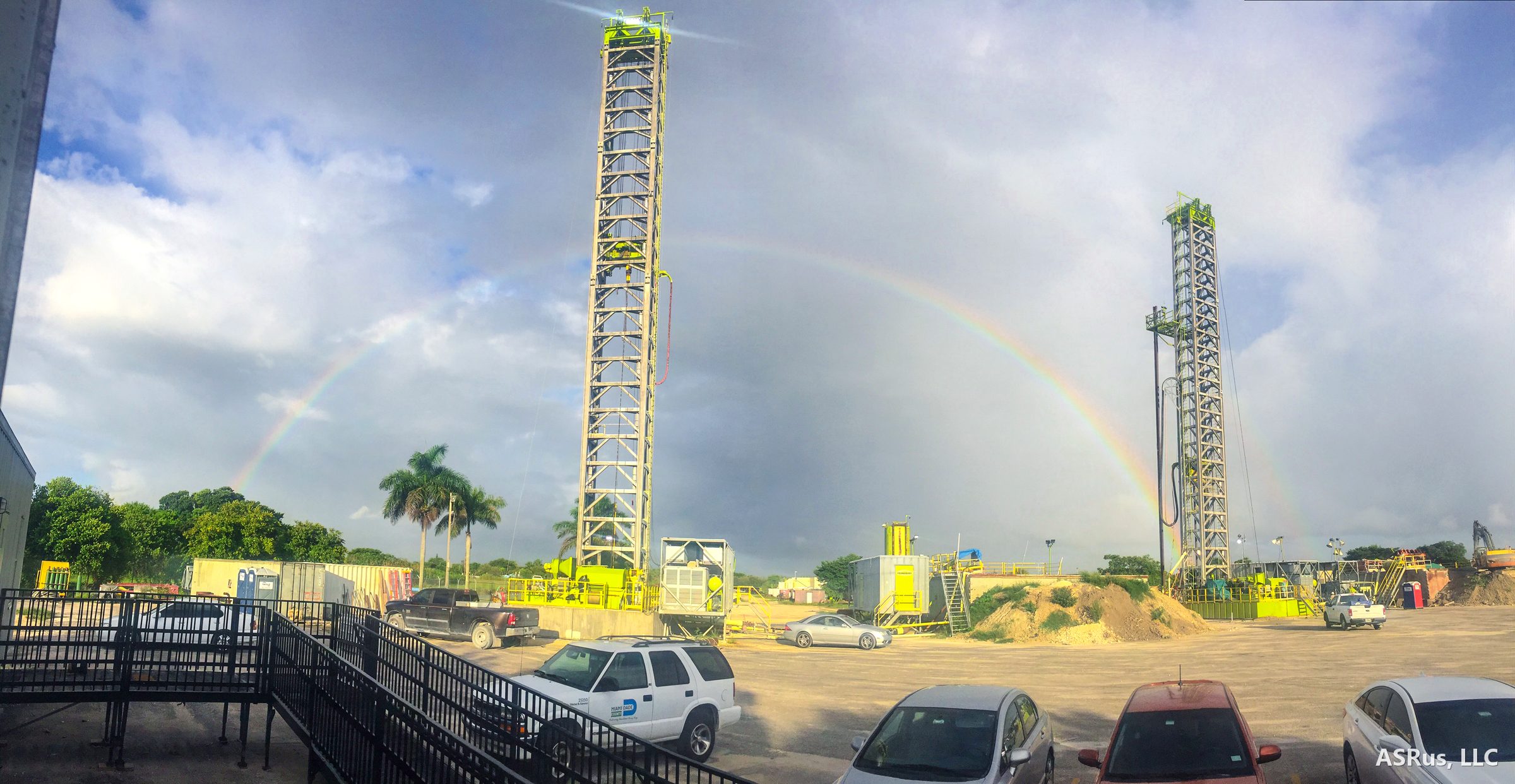
Our specialty is the development of Underground Injection Control (UIC) projects throughout Florida including deep injection wells, ASR systems, and aquifer recharge wells. We promote innovative underground injection concepts to better utilize and manage Florida's water resources while protecting the environment. Another core focus of ASRus is groundwater supply and consumptive use permitting. We have a fully capable and experienced staff that can handle any groundwater development or underground injection project.
Underground Injection
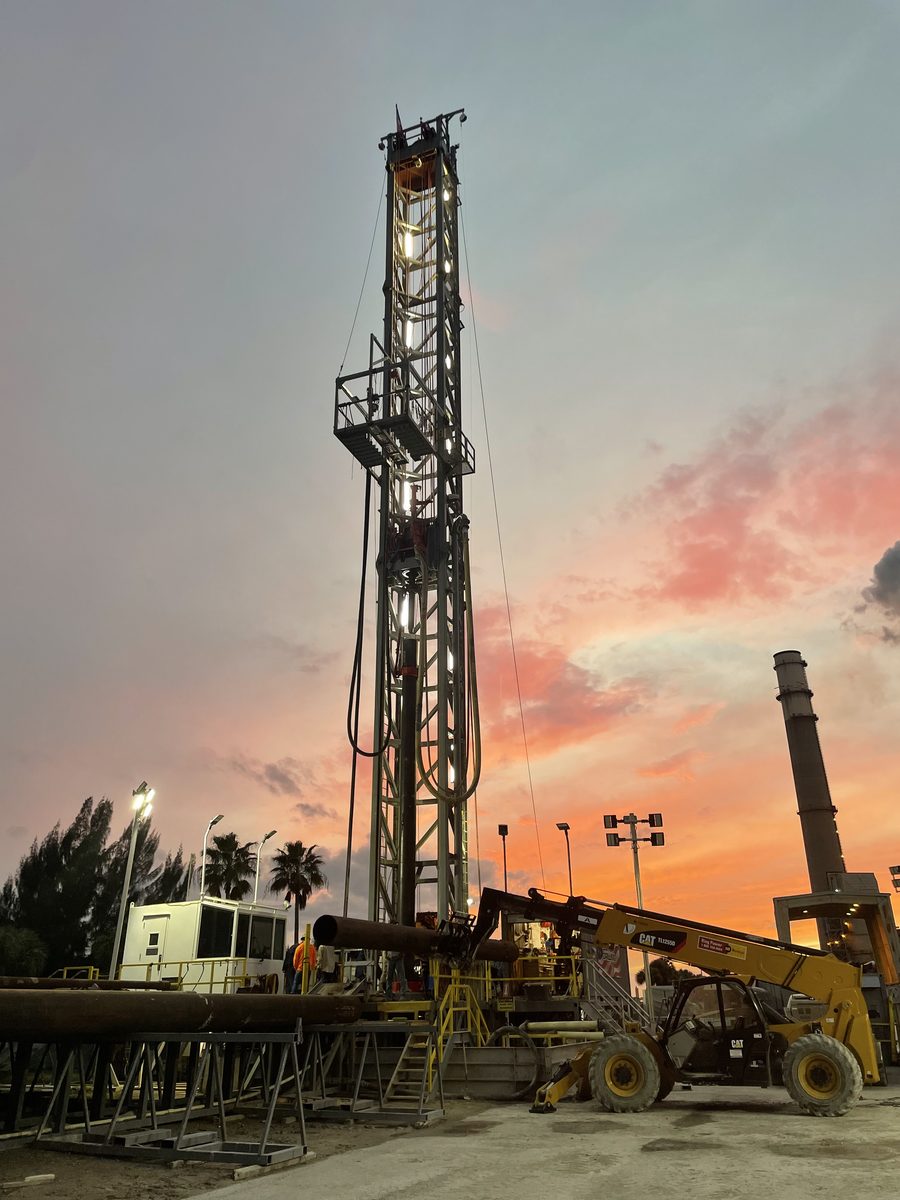
Planning, permitting, design, construction oversight, and regulatory compliance stewardship.
Services →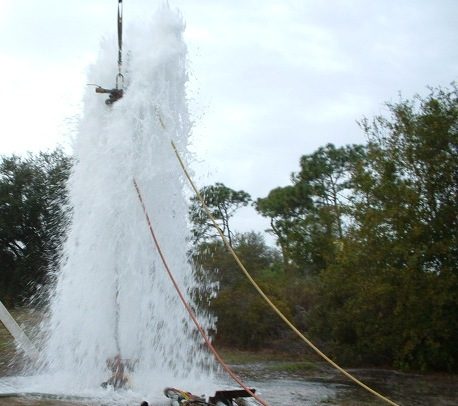
Water Supply Development & Permitting
Consumptive use permitting, wellfield design, construction oversight, well field optimization.
Services →ASRus is there for every phase of the project
- 1 Feasibility Feasibility studies and groundwater flow modeling.
- 2 Permitting FDEP UIC and water management district permitting.
- 3 Construction Oversight, casing seats, contractor coordination.
- 4 Testing Aquifer performance, water quality, cycle testing.
- 5 Compliance Mechanical integrity testing, annual reports.
- 6 Performance Performance evaluations and rehabilitations.
Our Approach
ASRus is well known among engineering firms in Florida as we routinely work in concert with these highly respected firms providing them specialized hydrogeologic services. ASRus has a reputation for developing cost effective, innovative solutions using underground injection. Our understanding of Florida geology and the conditions required for a successful UIC project is based on years of experience. This experience and our understanding of the regulations allow us to find solutions to complicated underground injection projects. Our clients and partners recognize our commitment to sensible solutions and trust that we are there to support them long after a project is complete.
Some of Our Many Significant Accomplishments
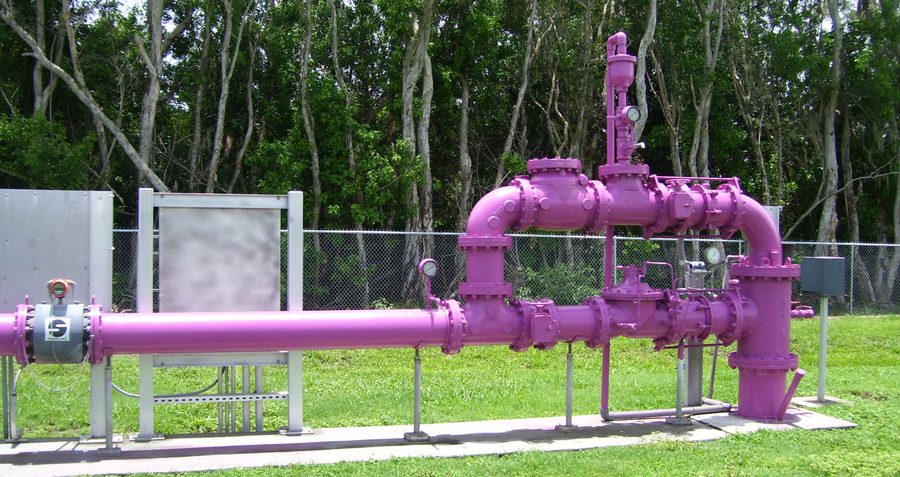
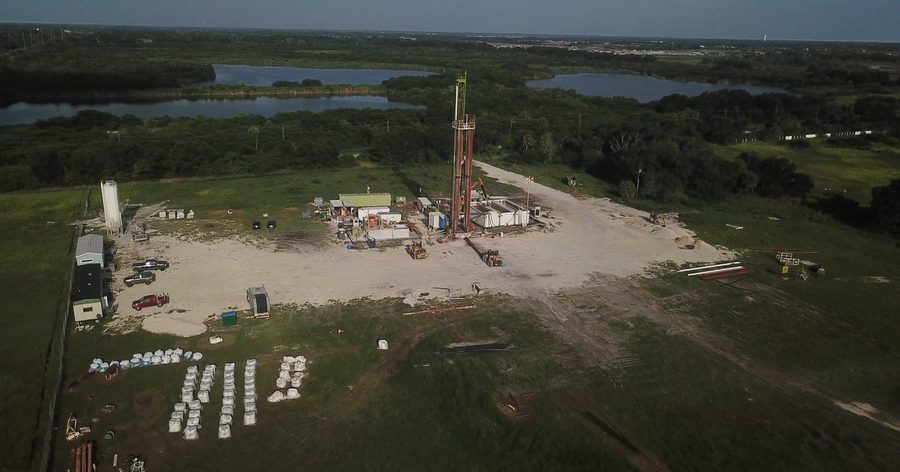
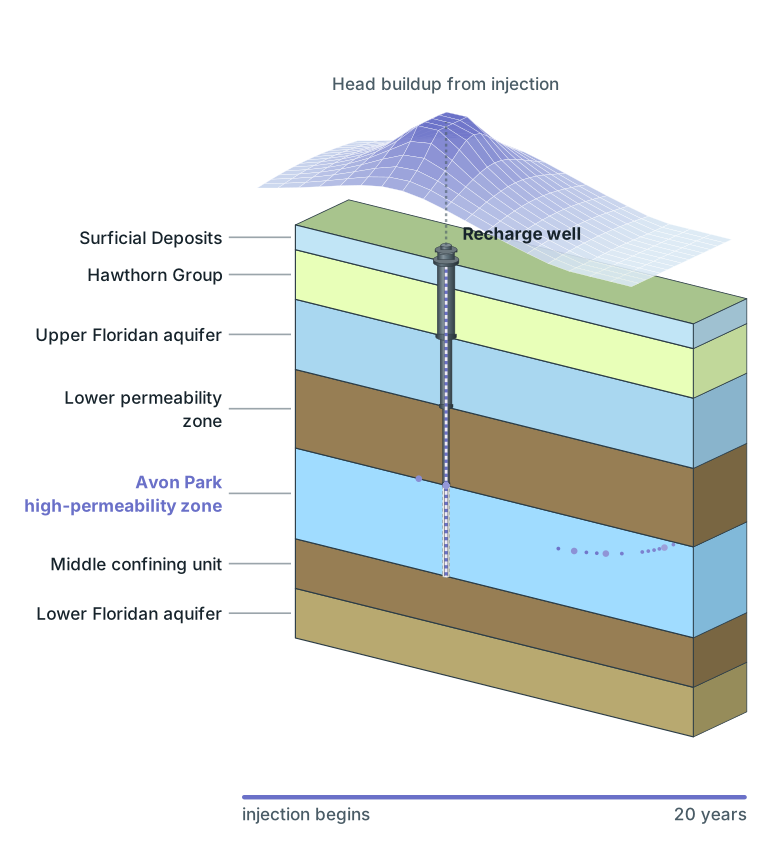
General
- Assisted over 100 municipalities and private clients throughout Florida to develop water supplies and UIC strategies to better manage water resources
- Designed and permitted Class I, Class II, and Class V Groups 2, 3, 4, 6, 7, and 9 wells in Florida
- Designed, permitted, and oversaw construction of injection wells utilizing the Upper Floridan aquifer (UFA), Lower Floridan aquifer (LFA), and sub-Floridan permeable zones for municipal and industrial wastewater disposal
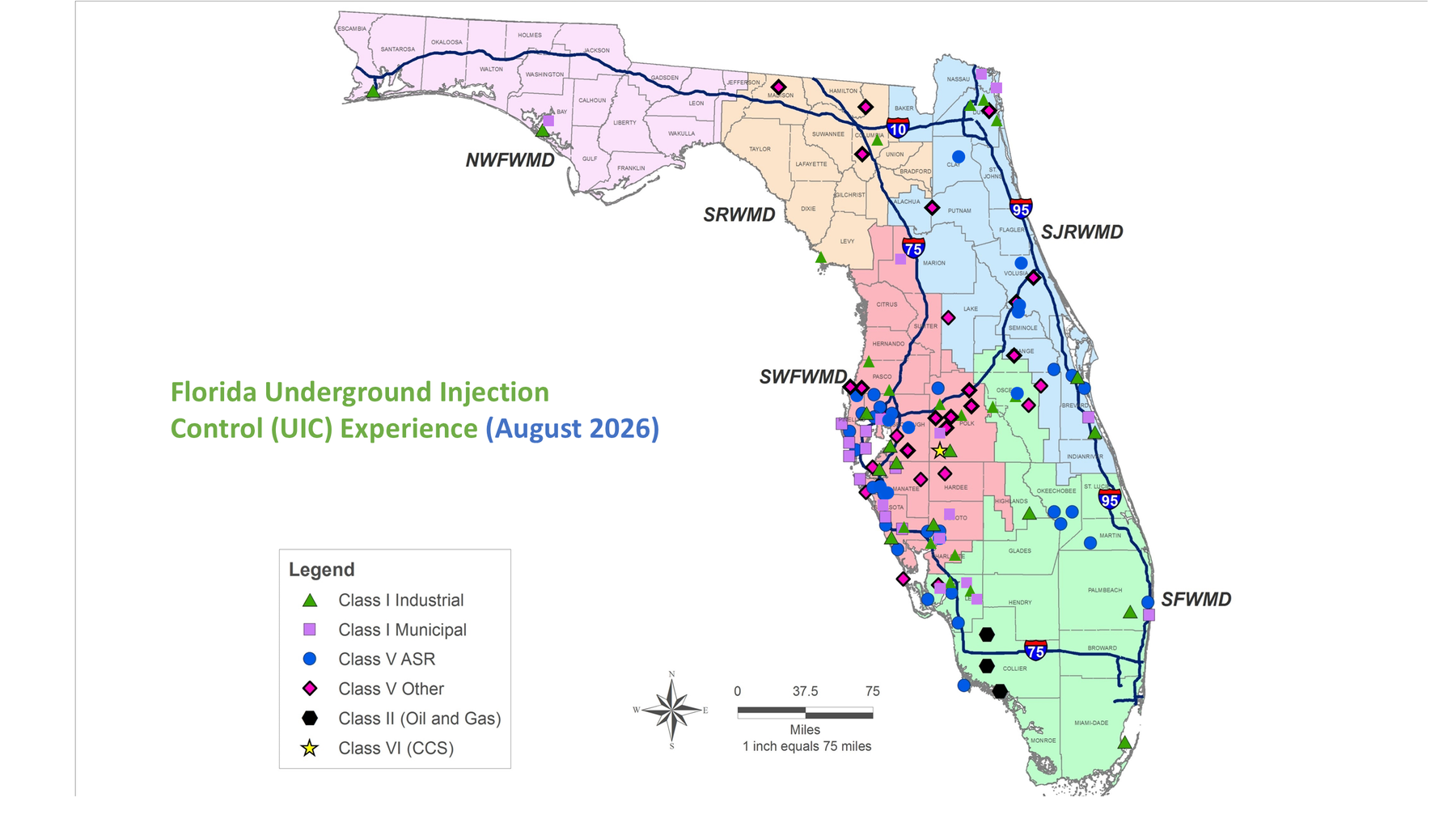
- Designed, permitted, and oversaw construction of UIC wells in south Florida, west central Florida, central Florida, northeast Florida, and the Florida Panhandle
Disposal Wells
- Developed the first Class I injection well to manage phosphate process water
- Among the first to develop non-Boulder Zone Lower Floridan aquifer Class I municipal and industrial injection wells in peninsular Florida
- Permitting and senior technical support for the first sub-Floridan Class I injection wells completed to 8,000 feet
- Designed, permitted, and oversaw construction of the first successful municipal injection wells in northeast Florida
- Refined and implemented use of the Radioactive Tracer Survey for internal Mechanical Integrity demonstrations as an alternative to packer testing in Class I wells
- Designed, permitted, and oversaw construction of the first industrial wastewater discharge into a G-II aquifer
- Alternative well rehabilitation procedures developed to restore lost injection capacity where standard methods were ineffective
Aquifer Recharge
- Industry leader in developing Aquifer Recharge projects to support additional groundwater withdrawal allocations
- Permitted the largest reclaimed water aquifer recharge project in Florida
- Designed, permitted, and oversaw construction of the first successful municipal effluent aquifer recharge well in central Florida
Aquifer Storage and Recovery (ASR)
- Designed, permitted, and oversaw construction of ASR wells storing potable water, reclaimed water, and partially treated surface water in Florida
- Provide continuous support to the two largest potable water ASR systems in Florida
- Responsible for the completion of Florida's deepest ASR well to 3,000 feet
- Responsible for the first reclaimed water ASR construction and operation permits
- First ASR Ordinance to demonstrate Institutional Control in Florida
- Successful operation of ASR wells in storage zones approaching seawater salinity
- Pilot testing of raw surface water ASR to demonstrate microbial inactivation in the subsurface using a zone of discharge concept, conclusively demonstrating total coliform die-off with residence time in the Floridan aquifer
- Developed and successfully permitted regulatory strategies (zone of discharge and water quality criteria exemption) for total coliform die-off in the subsurface
- Industry leaders in managing arsenic mobilization through various treatment, operational, and regulatory strategies
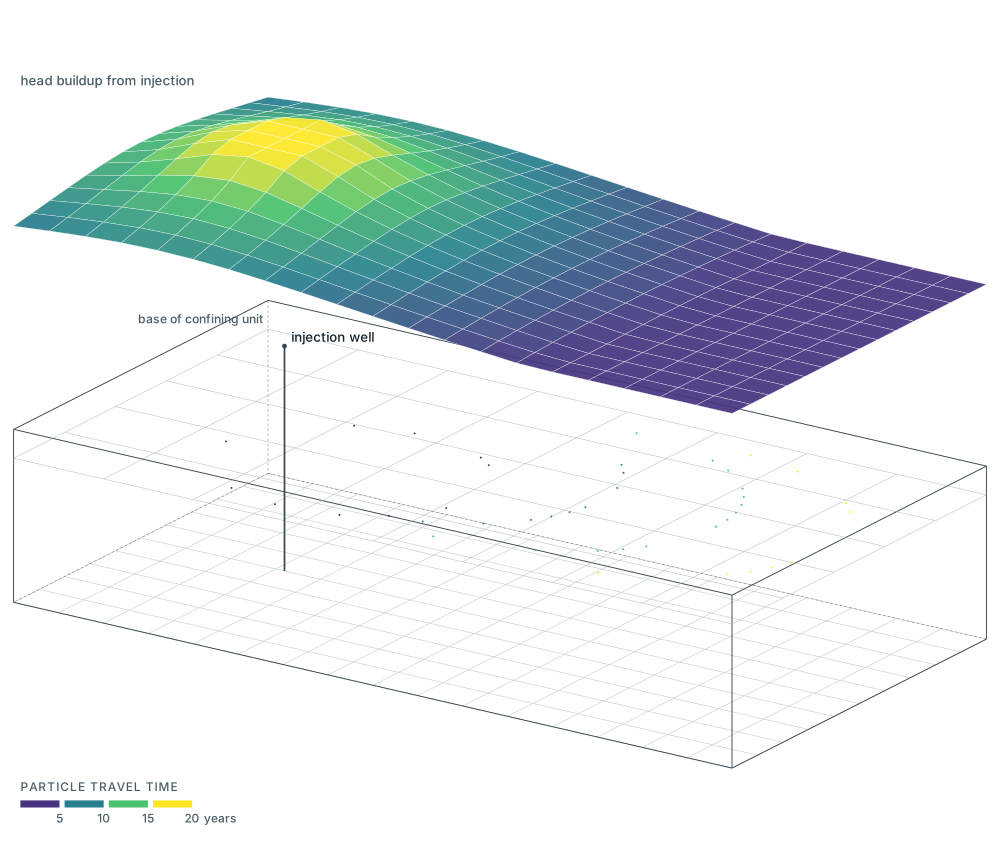
Florida UIC Experience
Groundwater Management at work
Sustainable water management solutions to protect our water resources
Underground injection is a multifaceted tool – below is an example of Aquifer Storage Recovery (ASR) used to store water in the aquifer, Aquifer recharge used to replenish depleted aquifers and mitigate saltwater intrusion, and Class I injection wells used to sequester wastewaters in saltwater zones isolated from usable portions of the aquifer.
WTP — water treatment plant. WWTF — wastewater treatment facility. RO — reverse osmosis, the membrane treatment that turns brackish water into drinking water and leaves a saltier concentrate behind.